Whether you’re planning a home renovation, consolidating debt, paying for education, or covering unexpected expenses, a personal loan can provide quick access to funds. However, borrowing without comparing lenders may cost thousands of rand in unnecessary interest over the life of the loan.
South African banks offer a wide range of personal loan products with different interest rates, repayment terms, and qualification requirements. Understanding these differences helps borrowers secure affordable financing while avoiding unnecessary debt.
This guide explains the main types of personal loans available in South Africa, factors affecting loan interest rates, eligibility requirements, and practical tips for improving your approval chances.

Contents
Types of Personal Loans in South Africa
Not every loan serves the same purpose. South African lenders provide different financing options depending on your financial needs, repayment ability, and credit profile.
1. Unsecured Personal Loans
Unsecured loans are the most common personal loans offered by banks. They do not require collateral such as a vehicle or property. Instead, approval is based mainly on your income, affordability, and credit history.
These loans are ideal for:
- Medical emergencies
- Travel expenses
- Wedding costs
- Education
- Debt consolidation
- Home improvements
Because there is no collateral, lenders generally charge higher interest rates compared to secured loans.
2. Secured Personal Loans
A secured loan requires an asset as security, such as a vehicle, savings account, or investment. Since the lender carries less risk, borrowers usually receive lower interest rates and may qualify for larger loan amounts.
If repayments are missed, the lender may repossess the pledged asset.
- Lower interest rates
- Higher borrowing limits
- Longer repayment periods
3. Debt Consolidation Loans
Many South Africans use personal loans to combine several debts into one manageable monthly payment. Instead of paying multiple credit cards and store accounts, a debt consolidation loan allows borrowers to make a single payment, often at a lower interest rate.
Benefits include:
- Simplified budgeting
- Lower monthly repayments
- Potentially reduced interest costs
- Improved credit management
4. Emergency Loans
Unexpected expenses such as medical bills, urgent vehicle repairs, or family emergencies may require immediate financing. Some South African lenders offer fast approval and same-day funding for qualifying applicants.
Although convenient, emergency loans may carry higher interest rates, making them better suited for short-term financial needs.
5. Salary-Based Loans
Salary-based loans are designed for employed individuals who receive a regular monthly income. Approval focuses heavily on income stability and affordability rather than collateral.
Many banks offer flexible repayment periods ranging from 12 to 84 months, depending on the loan amount.
Why Comparing Personal Loans Matters
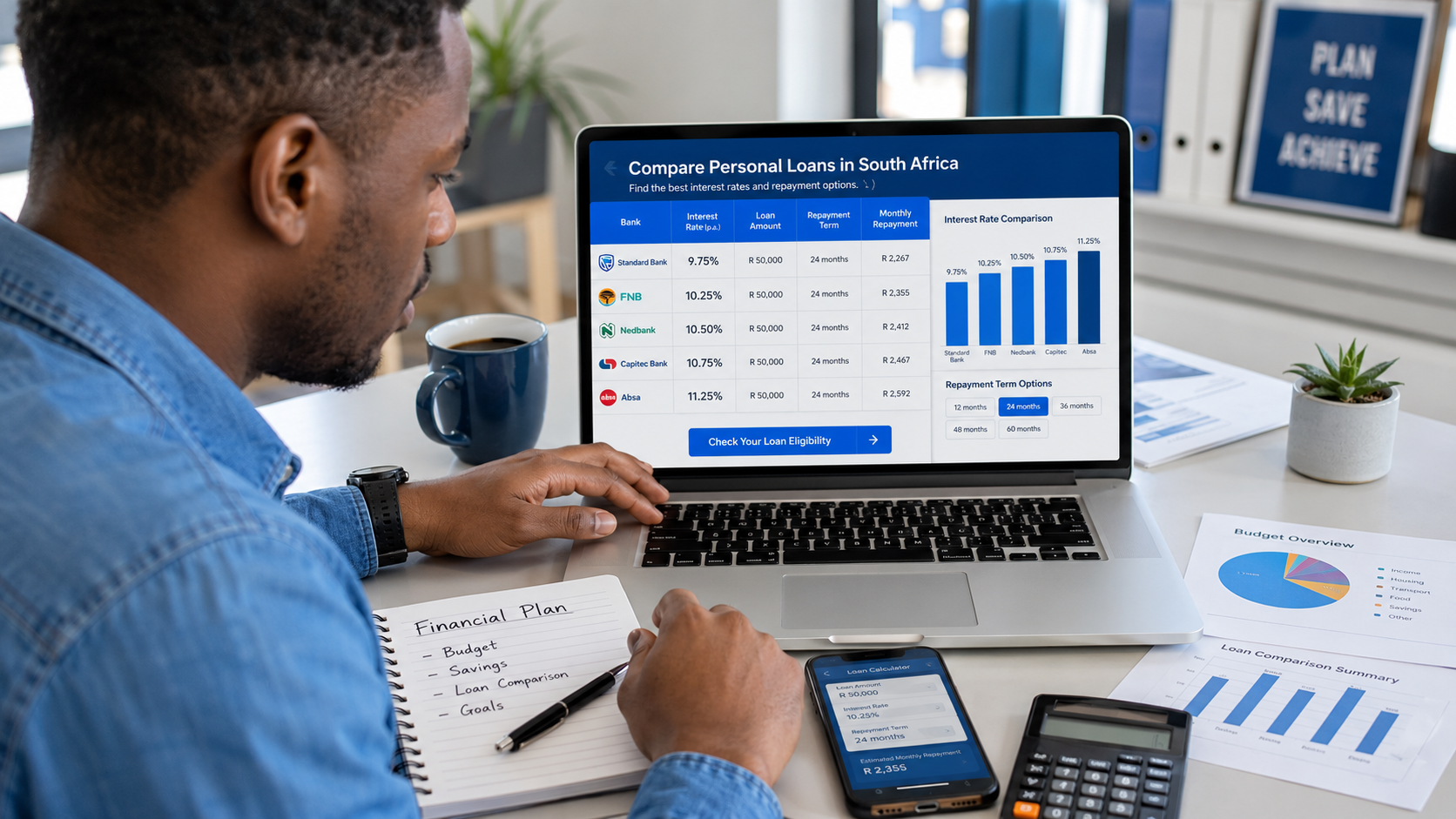
Choosing the first loan offer you receive can be expensive. Even a small difference in interest rates can save—or cost—you thousands of rand over the life of the loan.
When comparing lenders, consider:
- Interest rate (fixed or variable)
- Monthly repayments
- Initiation fees
- Monthly service fees
- Repayment flexibility
- Early settlement penalties
- Loan insurance requirements
- Customer service and digital banking tools
Factors That Affect Personal Loan Interest Rates
Personal loan interest rates in South Africa vary from one borrower to another. Banks assess your financial profile before deciding what rate to offer. Applicants with strong credit histories and stable incomes generally qualify for lower interest rates, while higher-risk borrowers may pay considerably more.
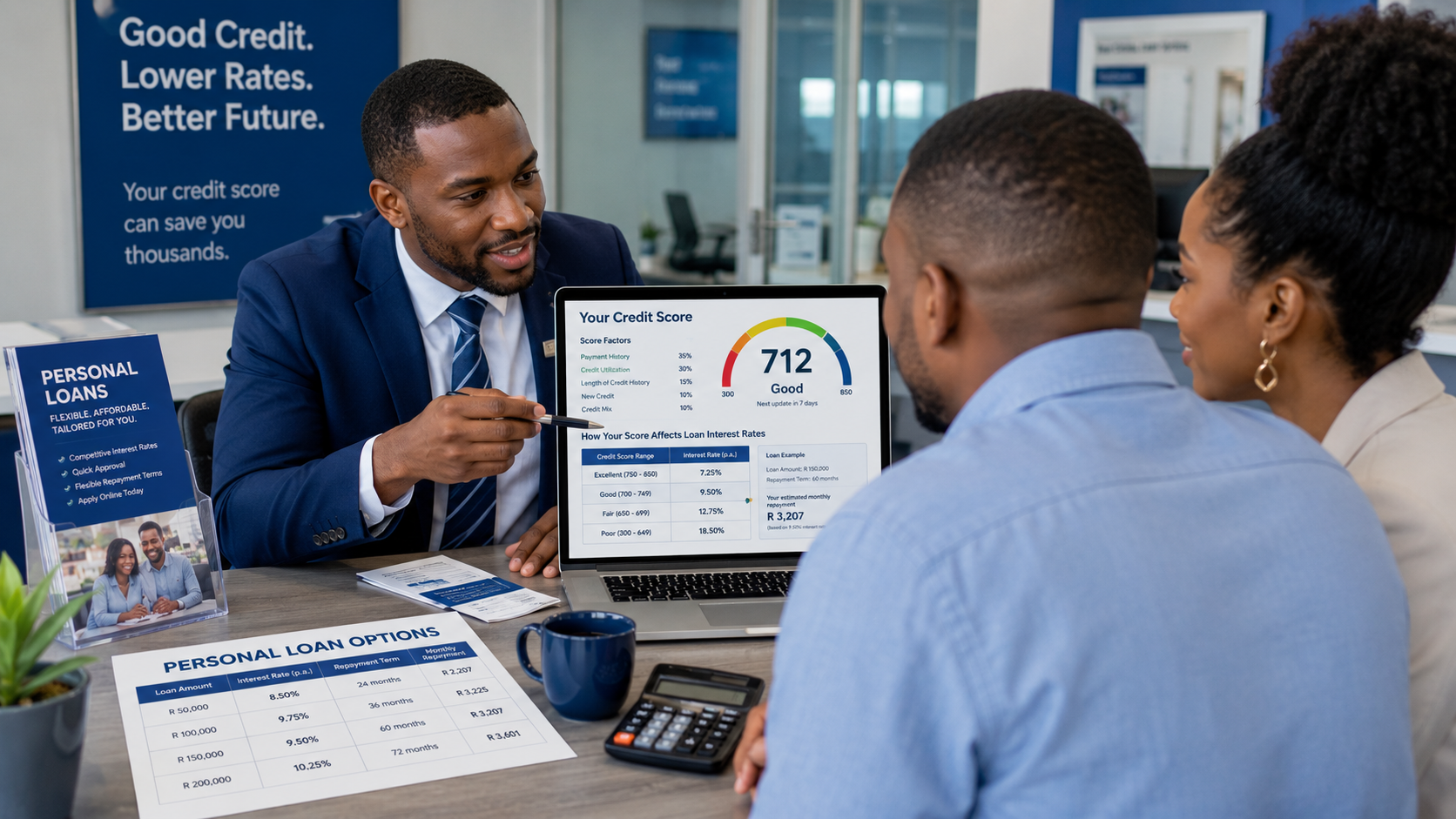
1. Credit Score
Your credit score is one of the most important factors affecting your loan application. It reflects how responsibly you’ve managed previous credit commitments.
- Excellent credit score → Better interest rates
- Good repayment history → Higher approval chances
- Late payments → Higher borrowing costs
- Defaults or judgments → Possible loan rejection
2. Monthly Income
Banks want to ensure that you can comfortably afford monthly repayments. Applicants with consistent employment and reliable income generally receive more favourable loan offers.
Most lenders calculate your affordability by comparing your income against existing monthly financial commitments.
3. Existing Debt
Having several outstanding loans or credit card balances increases your debt-to-income ratio. A lower debt burden usually improves approval chances and may qualify you for better interest rates.
4. Loan Amount
Borrowing larger amounts may require stricter affordability assessments. While larger loans often have longer repayment periods, they also increase the total interest paid over time.
5. Loan Repayment Period
Longer repayment terms reduce monthly instalments but usually increase the total interest paid. Shorter repayment periods often save money overall, provided the monthly repayments remain affordable.
6. Employment Stability
Applicants employed full-time for an extended period generally present less lending risk than individuals with irregular or seasonal income.
Compare Personal Loan Rates from Leading South African Banks
The table below provides a general comparison of personal loan offerings from three major South African banks. Actual rates depend on your credit profile, affordability assessment, and the lender’s current pricing.
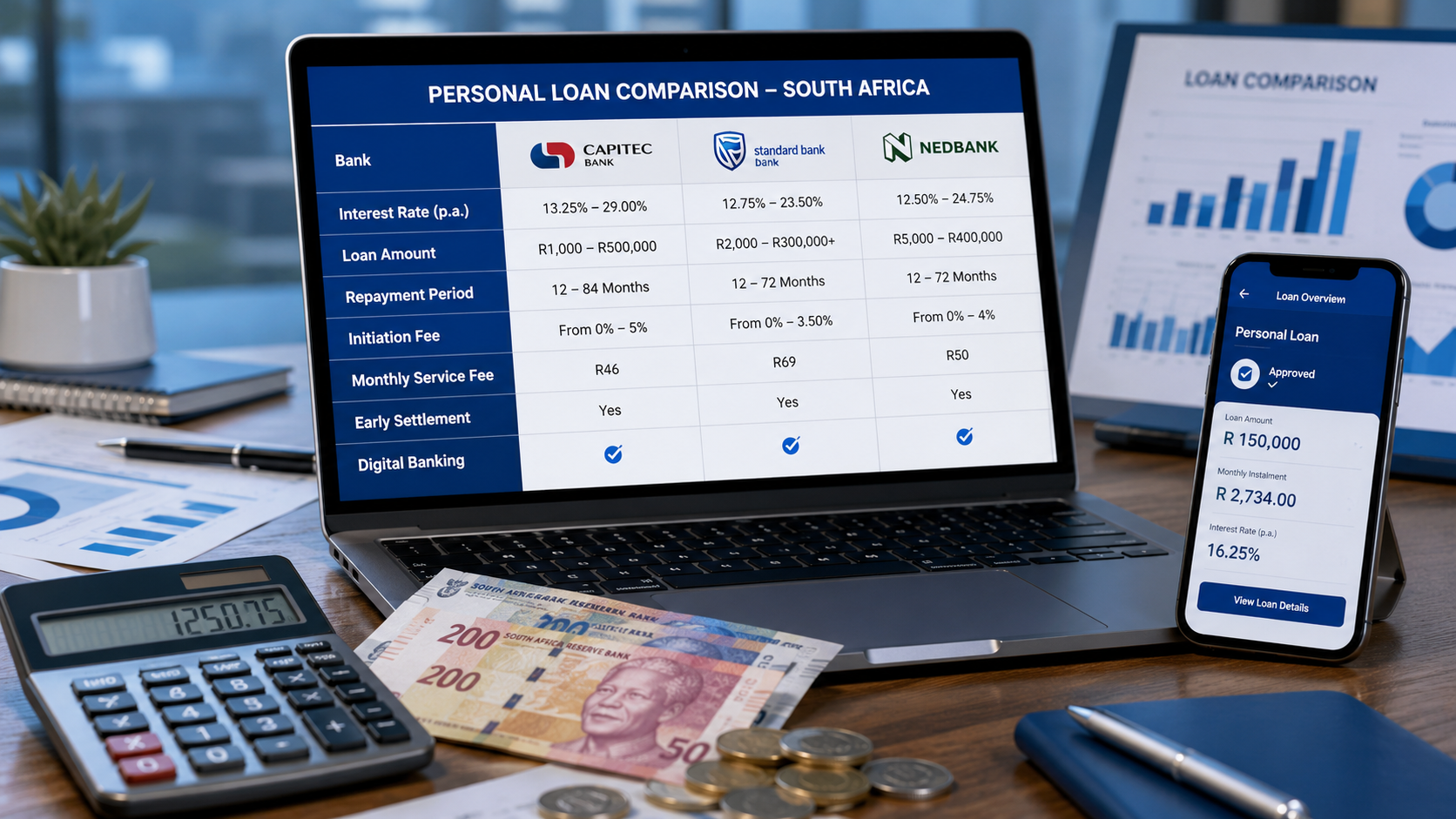
| Bank | Typical Interest Rate* | Loan Amount | Repayment Period | Main Benefits |
|---|---|---|---|---|
| Capitec Bank | From approximately 13%–29% p.a. | Up to R500,000 | 12–84 Months | Fast application process, flexible repayments |
| Standard Bank | Personalised rate based on affordability | Up to R300,000+ | 12–72 Months | Online application, flexible repayment options |
| Nedbank | Risk-based personalised interest rates | Up to R400,000 | 12–72 Months | Early settlement options and digital banking |
*Interest rates vary depending on creditworthiness, affordability assessment, and current lending policies.
How to Compare Loan Offers Effectively
Instead of choosing the lender advertising the lowest interest rate, compare the complete cost of borrowing.
Look at:
- Interest rate
- Total repayment amount
- Monthly instalment
- Initiation fee
- Monthly service fee
- Credit life insurance costs
- Early settlement flexibility
- Online account management
Eligibility Requirements by Bank
Although each lender has its own lending criteria, most South African banks request similar documentation during the application process.
| Requirement | Capitec | Standard Bank | Nedbank |
|---|---|---|---|
| South African ID | ✔ | ✔ | ✔ |
| Proof of Income | ✔ | ✔ | ✔ |
| Recent Bank Statements | ✔ | ✔ | ✔ |
| Minimum Age (18+) | ✔ | ✔ | ✔ |
| Credit Assessment | ✔ | ✔ | ✔ |
| Affordability Check | ✔ | ✔ | ✔ |
Documents Usually Required
- South African identity document
- Latest payslips
- Three months’ bank statements
- Proof of residence
- Employment details
- Contact information
How to Improve Your Credit Score Before Applying for a Loan
A higher credit score can significantly improve your chances of loan approval while helping you qualify for lower interest rates. Even small improvements in your credit profile can reduce the overall cost of borrowing.

1. Pay Bills on Time
Your payment history is one of the biggest factors used by lenders. Always pay credit cards, store accounts, loans, and utility bills before their due dates.
2. Reduce Outstanding Debt
Lowering your existing debt improves your debt-to-income ratio and demonstrates responsible financial management.
3. Avoid Multiple Loan Applications
Submitting several loan applications within a short period may negatively affect your credit profile. Compare lenders first and apply only when you’re confident you meet the requirements.
4. Check Your Credit Report
Review your credit report regularly to ensure all information is accurate. If errors appear, contact the relevant credit bureau and request corrections before applying for finance.
5. Build a Positive Credit History
Using credit responsibly over time demonstrates reliability to lenders. Maintain low balances and make repayments consistently.
Common Mistakes to Avoid When Applying for a Personal Loan
- Borrowing more than you actually need
- Ignoring additional fees and charges
- Choosing the longest repayment period without calculating total interest
- Applying at multiple banks simultaneously
- Missing repayments after loan approval
- Not comparing offers from different lenders
- Failing to read the loan agreement carefully
Benefits of Comparing Banks Before Borrowing
Comparing lenders allows you to find the most competitive offer based on your financial circumstances.
- Lower monthly repayments
- Reduced total borrowing costs
- Better customer service
- Flexible repayment options
- Faster approval process
- Access to online banking tools
- Improved financial planning

Frequently Asked Questions
How much can I borrow with a personal loan in South Africa?
The amount depends on the lender, your income, affordability assessment, and credit profile. Many banks offer personal loans ranging from a few thousand rand up to several hundred thousand rand.
Can I get a personal loan with a low credit score?
Yes, but approval may be more difficult and the interest rate is likely to be higher. Improving your credit score before applying can increase your chances of receiving better loan terms.
How long does loan approval take?
Many South African banks provide decisions within a few hours or one business day, provided all required documents are submitted.
Can I repay my loan early?
Some lenders allow early settlement, although certain products may include settlement fees. Always review your loan agreement before signing.
Is a personal loan better than using a credit card?
It depends on your financial goals. Personal loans usually provide fixed repayment schedules and predictable monthly instalments, making budgeting easier for many borrowers.
Check Your Loan Eligibility
Ready to compare South African banks and discover which personal loan best suits your financial needs?
Use our free loan eligibility tool to:
- ✔ Compare multiple lenders
- ✔ Estimate monthly repayments
- ✔ Check affordability
- ✔ View estimated interest rates
- ✔ Apply online in minutes
Final Thoughts
Choosing the right personal loan is about more than simply finding the lowest advertised interest rate. Comparing lenders, understanding the total cost of borrowing, maintaining a healthy credit score, and selecting an affordable repayment period can save you a substantial amount of money over time.
Whether you’re consolidating debt, financing a major purchase, or covering unexpected expenses, taking the time to compare South African banks ensures you make an informed financial decision that supports your long-term financial wellbeing.